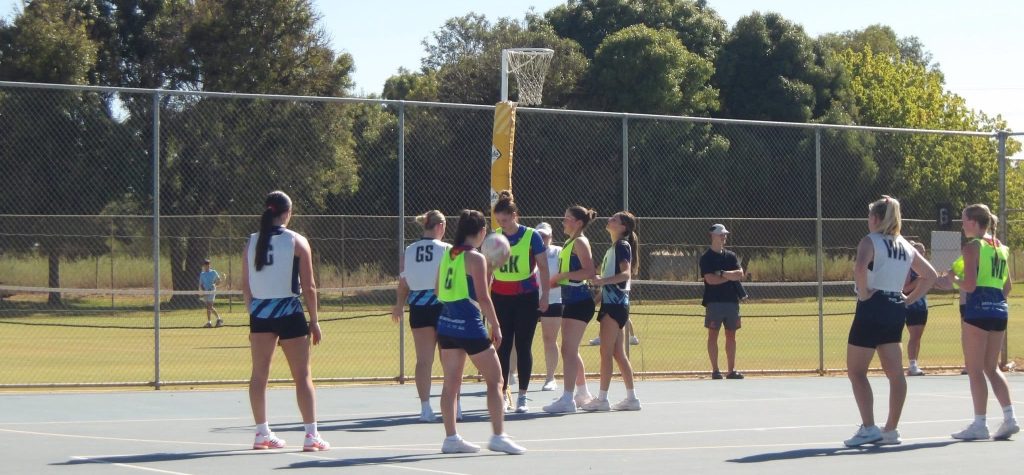

An hour west of Melbourne, the small country town of Ballan hides among the gum trees and the fairways of its golf course. In winter the air bites hard, wood fires crackle in lounge rooms and smoke drifts from chimneys all across town. But on Saturday afternoons, the glow shifts to the end of Cowie Street, where the Ballan Blues take to the football field and netball courts in front of locals who’ve known each other for generations.
If you’ve spent any time around the Ballan Football Netball Club, you know the stories run deeper than the win-loss column. The Blues haven’t lifted a senior football premiership cup since 1981, but inside there’s a sense of change – a rebuild, maybe even the start of a new beginning.
President David O’Hanlon has lived it from the start. He first pulled on a jumper in the early ‘90s for the under-14s as a seven-year-old, too small, but too keen to be kept away. Decades later, he’s done everything from coaching, to running the committee, and now serves as president.
“I’ve been there my whole life, mate,” he tells upstart. “Never left, haven’t been anywhere else in the last 30 years. I wouldn’t really want to be anywhere else.”

For O’Hanlon, memories of the club are stitched into the fabric of his life, from following goal kickers end to end as a kid, to nights spent in the old long room. And while flags have been few, the sense of belonging has never left.
But he’s not naïve. He knows that country footy clubs are judged on their senior team’s success, and Ballan’s last senior triumph is now 43 years in the past.
“It’s unfair, because we’ve had other flags in reserves and juniors, and netball’s been close,” he says. “But that’s the way it is. The senior footy team sets the tone.”
And that tone, in recent years, has been about survival.
The pandemic years hit the club hard, forcing junior teams into recess and threatening to break the pipeline that sustains country footy. Then came years without a true home, when the old clubrooms were demolished and construction delays dragged on.
“We didn’t play a home game for two years,” O’Hanlon says. “It was four years of pain, and there were times where you wondered if we’d even survive.”
The club has moved into the new facility, and O’Hanlon says it’s “a thousand times better than what it was”.
“We might have done a few things differently if we had our time again,” he says. “But it’s given us a base. It’s a place people want to be, and that’s what matters.”
For 200-game stalwart Daniel Nielsen, who left to play at Hoppers Crossing before returning post-COVID, the contrast was stark. At Hoppers, he had line coaches, video reviews, professional standards and elite facilities. Coming back to Ballan, he found site sheds, donated by volunteers, standing in for clubrooms. Now, with the new rooms, he sees opportunity.
“It’s a selling point,” Nielsen tells upstart.

“When the facilities are good, people want to stay, and they want to come. The netballers have proper changerooms, families can sit inside out of the rain with the bar going, and the place feels alive again. That’s what makes players want to be here.”
Buildings can rise quickly, but lasting success comes from the ground up. For Ballan, the real foundations are the juniors.
O’Hanlon has made that his mission. Four years ago, Ballan struggled to field an under-18s side. Now juniors and Auskick are overflowing, with dozens of kids in every age group.
“That’s the pipeline,” he says. “That’s the base. You can’t just buy premierships with imports, you need locals who bleed for the jumper.”
Nielsen agrees. “You can’t buy stability,” he says.
“You’ve got to create it. Our best and fairest last year was a recruit, but second, third and fourth were all locals. Most weeks now the top four or five are Ballan locals. That’s how you build something that lasts.”
And that’s the point. Nobody at Ballan is promising instant success. They’ve been down that road before, throwing money at recruits and watching them move on. O’Hanlon wants something more sustainable.
“We’re not looking for a quick fix,” he says. “We want to get there and stay there. Keep breeding young players, add one or two good ones every year, and never fall back to the bottom.”
The drought hangs heavy, of course. Forty-three years is a long time. O’Hanlon sees signs of progress, while Nielsen feels the clock ticking on his own career.
“I’ve played in one senior finals series for Ballan,” he says.
“Some blokes have never played in one. It’d be special to get there, to give the town that feeling again. You walk past the old photos in the rooms, I’m not even sure if it’s in colour that [last premiership] photo. We’re all aware.”

But sometimes for these communities, it really is about more than football. That’s why the new facilities mean so much. It isn’t just bricks and mortar; it’s an anchor. Towards the end of our chat, O’Hanlon drops the kind of line that sums up Ballan as a club.
“Make yourself known next time you’re there,” he said. “I’m always around and someone will point me out, [I’d] love to meet you. If not, I’m on Berry Street, pop down for a beer and watch the footy.”
It’s casual, welcoming and as Ballan as it gets. An open invitation from the local footy club president. Not delivered as polished PR, but as who he is.
Article: Cam Burt is a second-year Media and Communications (Sports Media major) student at La Trobe University. You can follow him on Twitter @coachcavcam.
Cover photo: supplied by the Ballan Football Club